Unknown's avatar

n+1’s World Lite: A Hopeful Response

795px-Brueghel-tower-of-babel

“The key institution in the creation of World Literature has not been the literary festival, or even the commercial publishing house, but the university.” So write the editors at the influential and relatively young literary and criticism journal, n+1, in Issue 17, in turn posted their blog under the title “World Lite”—just in time for the return to school in August 2013. The editors went on to express their concern for this state of affairs, citing the sophomore efforts of novelists who became university professors after their debuts—such as Junot Díaz and Dinaw Mengestu—as removed, metafictional, rather than straightforward and direct.

As a professor of North African and Middle Eastern literature and culture in French, as well as a fiction writer and essayist, I must disagree with n+1’s assessment, as well as the statement that “No law of literature says the university can’t be the setting of great fiction, but it says something about the difficulty of the feat that the best example we can think of—[Don] DeLillo’s White Noise—was written by a writer who has never taught at one.” My first reaction is that former university professor Richard Russo’s cutting and hilarious yet gentle and empathetic novel Straight Man, narrated by the chair of an English department at the satellite campus of a public university, seems to be a lacuna in n+1 editors’ reading. Second, what of professors whose fiction writing remain steadfastly grounded in other realms of experience outside of the classroom? These include a number Francophone writers who teach in the American university system, such as Hélène Cixous, Maryse Conde, Assia Djebar, and Alain Mabanckou. These writers remain committed (and I use the term “committed” in the sense that Jean-Paul Sartre uses it in his essay “What is Literature?”) to represent experience from the periphery, of marginalization, of lives lived in second, third, or multiple languages and cultures.

And in turn, what can the fiction writer’s imagination do for the teaching of literature and culture? The problem with answering that question is that the ways in which the fiction writer has become codified within the American university system are completely unimaginative: these instructors and professors are ordered through English vs. foreign language, rather than genre or area of specialization. What do I mean by this? In brief and as a general principle, in the humanities, novelists who write in English will most frequently be found in creative writing programs and/or English departments, teaching American and English literature. Writers whose fiction is translated into English, by contrast, are most often housed in comparative literature, or a foreign/modern/classic/ancient/contemporary language department. And how often do we find scientists, sociologists, mathematicians, who are recognized for writing fiction?

This, I think, is really unfortunate. I recently read somewhere (and I will annotate this post as soon as I remember where) that it makes no sense for creative writing to be housed in English departments. Our influences as writers come from such wide-ranging, far-flung places.

I’m not exactly an envelope-pusher in this regard: I’m a French literature PhD who finds that she can’t help but write fiction as well. Both reading and writing order my world. And so they seep into everything else: my research, my parenting, and my teaching, just as a few examples. Personal essays with a critical point that were based on experiences during my research trips in Paris made their way into my dissertation. With my almost two-year-old daughter, I make up stories as we draw pictures, and I encourage her to narrate her experiences of the world (“Swing! Boom! Cry!” she recalls, and she touches her sore lower lip. “Yes, that’s right, sweetheart. That’s what happened, isn’t it?”). And as a teacher of French and Francophone literature and culture, whenever possible, I hinge class syllabi around narratives. For example, this fall, I teach a course on Paris literature and culture that I call “Metro Line 2: Paris Transnational,” that follows the logic of the metro line. Readings draw from the name of the stop; e.g., at the terminus Nation, we discuss the evolution of Place de la Nation and read Ernest Renan’s “What is a Nation?, while at Couronnes and Belleville we focus on the Jewish experience of Paris during the Vichy, using as a primary text Georges Perec’s W, Or the Memory of Childhood. Up at Barbès-Rochechouart, we read Leïla Sebbar’s Shérazade to open the discussion further to immigrant and second-generation experiences in Paris. And the idea is that the students will connect their own dots between the readings and lectures on the metro line and surrounding neighborhoods. Call it a simulated immersion experience (that’s what I’m going for, in some ways), or call it “cultivation of the terms under which reading occurs,” to borrow from Michael Allan’s insightful article on world literature.[1]

I’m not claiming that I do anything new, or novel. As a teacher, I draw from my experiences with a whole host of amazing teachers and professors (they who inspired me to do what it is I do for a living), my experiences as an undergraduate in Paris and how that differed from what I had expected, as well as my love of delving into other worlds through fiction, film, and music. What if I can reproduce that for my students in lit/culture courses?

As Ian McEwan wrote, “Imagining what it is like to be someone other than yourself is at the core of our humanity. It is the essence of compassion, and it is the beginning of morality.” And that’s what I want to get to as a fiction writer, and as a teacher of world literature. If my aims are for students to write from their own engagement with works across the humanities and their contexts, as well as to develop critical thinking and participatory citizenship skills that will serve them throughout their lives, then I need to walk the walk. But to the original point of n+1’s indictment of world literature as a university-borne phenomenon, I think this goes hand-in-hand with we are told about the humanities: that they are fading into obsolescence. Yet their relevance has never been more paramount in a world where news, information, and cultural works can be transmitted instantaneously. To possess textual interpretation skills that allow for the understanding of those different from us is part of what informs us as responsible citizens and members of a global community. And within textual interpretation comes the ability to imagine yourself in another place, another time, and most importantly, other shoes.

So let’s not diss world lit. Let’s just figure out more productive ways to putting it into service—and open up avenues for fiction writers to teach more imaginatively.


[1] Allan, Michael. “‘Reading With One Eye, Speaking With One Tongue’: On the Problem of Address in World Literature.” Comparative Literature Studies. 44:1-2 (2007): 1-19. Print.
Unknown's avatar

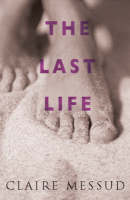
#SundaySentence, again from Claire Messud’s The Last Life

“Was it that tense that locked him, perhaps, the pluperfect: the turning before he knew there was a turning, the choice made before he had known there was such a thing as choice, so that any future he might have wanted glimmered in that unreachable place, the might-have-been?”

Who would ever think that the explanation of a verb tense could encapsulate a family tragedy so beautifully?

0151004714

Unknown's avatar

#SundaySentence from Claire Messud’s The Last Life

9780330375641

Following the lead of Erika Dreifus at The Practicing Writer, I’m posting my Sunday Sentence on my blog. Let me admit first that I’m eating crow here. I tweeted some time ago to the creator of the Sunday Sentence project, David Abrams of The Quivering Pen, that I wasn’t sure how I felt about people posting links to their Sunday sentences on their blogs rather than directly on Twitter. But then, I’ve had three weeks running where I’ve had to break my Sunday Sentence into two Tweets. And as you will see, part of the beauty of my sentence this week is the punctuation (more on that in a moment). So to break this sentence into two would have done it injustice.

The sentence appears at the conclusion of a pivotal and fairly devastating scene in Claire Messud’s The Last Life, a soaring yet intimate epic of a tale about a half-French Algerian (or pied noir) and half-American family, still reeling from the paternal side of the family’s exile from the former French department in the dying days of the Algerian revolution. The novel is narrated by the teenaged daughter, Sagesse. In the scene, she has brought home some friends, only to catch her father in the midst of… well, I won’t spoil it.

My Sunday Sentence comes from the passage in which Sagesse reflects on the effect her discovery has had on her understanding of her father, her family, and herself. “She,” in this sentence, refers to the person with whom Sagesse caught her father, although Sagesse never actually sees “her” in the flesh.

I admire this sentence for the grace with which it carries its weight within the paragraph, the scene, and the entire story:

“She, of herself—her features or the quality of her soul—matters not at all; she merely orders the narrative, and so can’t be left out.”

It’s Messud’s use of em dashes here that changes everything. How often do em dashes work formally to underscore meaning in such a gorgeous way? “She, of herself” is separated from “matters not at all” by “her features or the quality of her soul” – I read this as an adolescent daughter’s attempt to erase her father’s betrayal of her mother, her brother, and the family. But there is actually nothing “mere” about her role in the narrative. Indeed, “she can’t be left out.” And so, in the very statement in which Sagesse attempts to efface “her” presence, she demonstrates that “she” must remain. This sentence speaks to the impossibility of unbreaking what has been broken, of recovering what has been lost. And so this sentence indicates the point of rupture between the last life and the next. In other words, you can never return to the past. It is here that Sagesse realizes that you can never really go home again. 

Unknown's avatar

“In the electric light the traveler is writing”: At home and away

large_Lamour_web

Foreign language scholars often find that they become someone else in many ways when they are elsewhere, inhabiting another language, another culture. Becoming immersed in a different culture and language is similar to writing fiction in this way: you enter a world and become someone in it so as to understand its order, its logic, its rhythms.

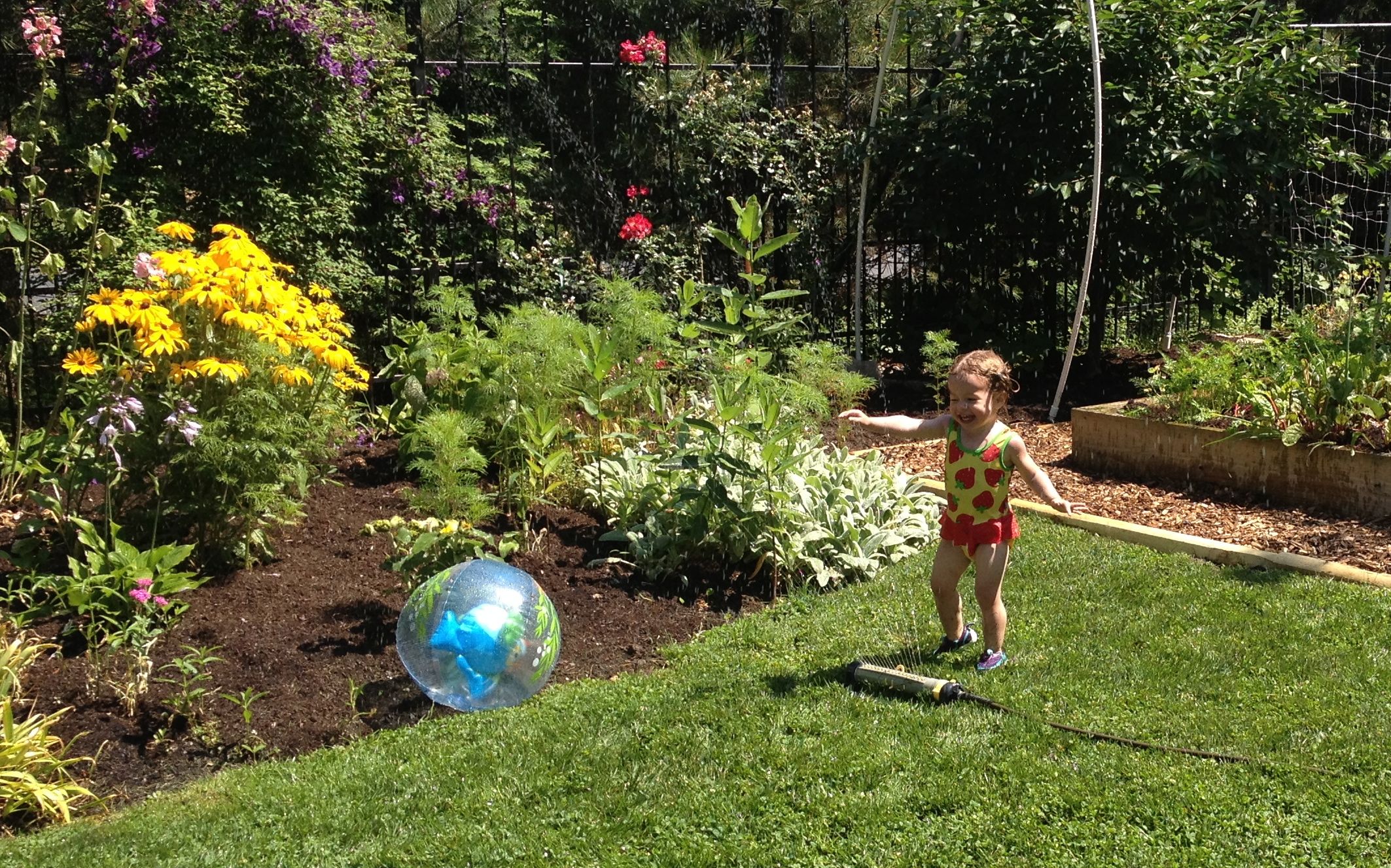
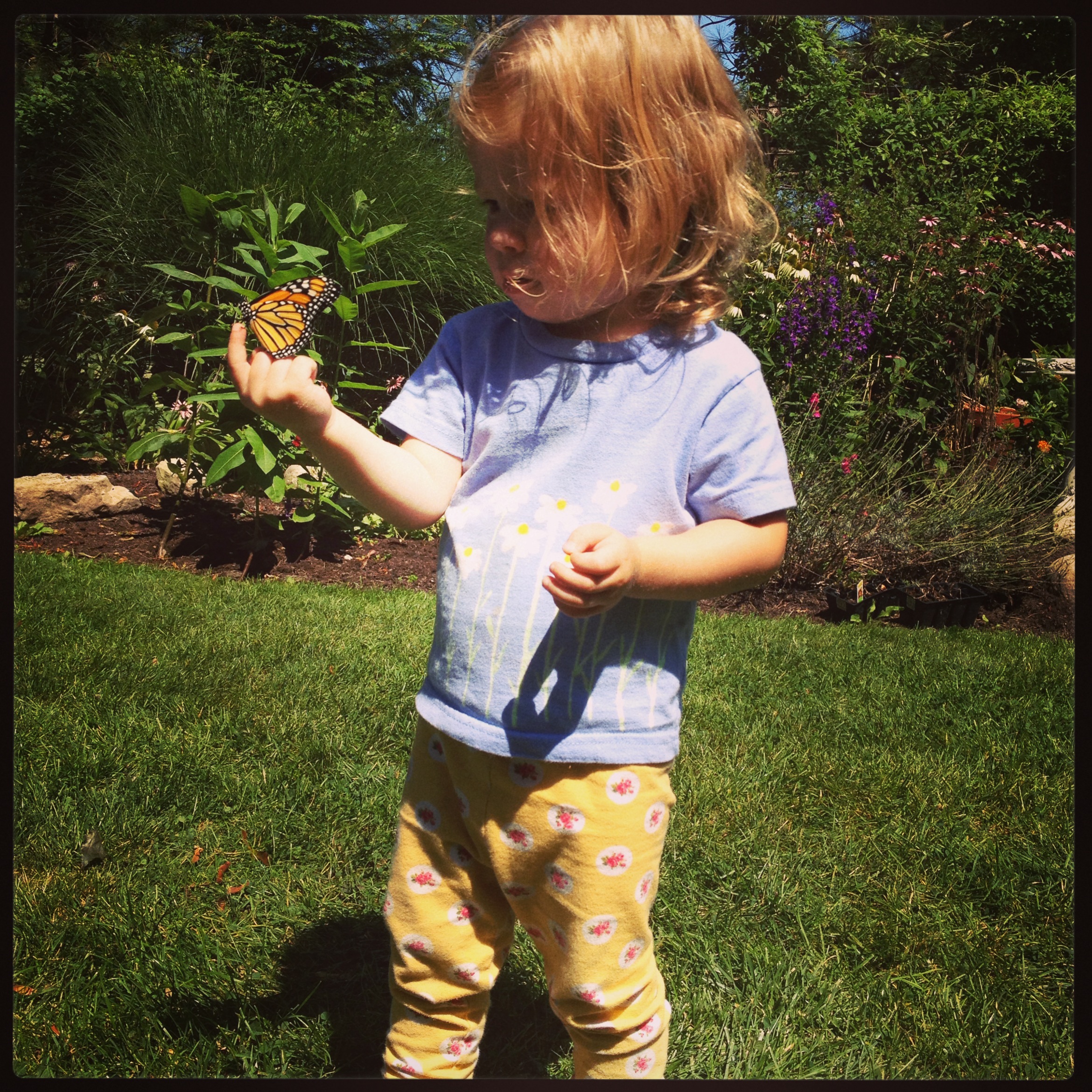
I am about to enter my last month of time at home with Audrey before I return to teaching. So I’ve been soaking in my time at home with her this summer. We’ve spent a fair amount of time in the backyard, tending our marigolds in the garden, swinging in the backyard swing, looking at bugs and butterflies together, and running through the sprinkler together (for Audrey, the first times).

When she’s napping or otherwise occupied, I write.

Fill in your own blanks, but these two things in tandem (spending time with my daughter on the cusp of year two, and immersed in my new novel) has made for some serious beauty this summer.

Two pieces have appeared recently by fellow writer-mothers that led me to put these thoughts together about this summer before I return to full-time teaching. Last week, I read Caitlin O’Neil’s lovely and inspirational essay about writing as the ultimate staycation. And then, a few days ago, Mary Vensel White wrote this astute essay based on Susan Sontag’s claim “if you want to go beyond something that is simply good or promising to the real fulfillment and risk-taking of a big body of work, you have to stay home.”

I was surprised and delighted by these two pieces juxtaposed with one another, as they fill in the gaps in something that’s been crossing my mind of late, that writing fiction is the ultimate escapist activity. It consumes your mind in a way that nothing else does. Even when I’m actually traveling—plane, train, car, in this country or another—I’m still in my skin, my life, my memories, my own awareness. Fiction? If you’re doing it right, you’re not just somewhere else – you’re someone else, too, consumed with their day-to-day, their consciousness, their joys and worries.

But so, too, does being a mother. I’m constantly amazed by the way that I perceive the world now – all of Audrey’s first times. The way the world must look from her vantage point, in terms of her stature, age, and experience. She amazes me.

And so motherhood and writing together? My world is all the more kaleidoscopic, multidimensional. Sometimes I wonder if I will ever need wanderlust again.

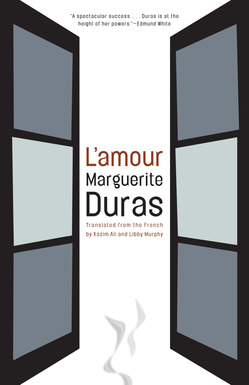
What first got me thinking about being somewhere else, someone else while writing was when I was drafting my introduction for an interview I conducted via email with Kazim Ali and Libby Murphy, the two translators of the first English edition of Marguerite Duras’ L’Amour, published this week by Open Letter Books. In my introduction I tried to convey to FWR readers—primarily fiction writers, of course—the experience of translating, and I compared it to inhabiting a character’s skin while that character was writing.

Truly great about the interview with Kazim and Libby was that, in addition to Duras’ mesmerizing text about former lovers’ return to the past, their responses to the interview questions also took me into another place.  Here: the sleepy seaside resort town of Duras’ novel. There: the idyllic gardens and house in Oberlin, Ohio, where the translators did their work. Voici the poet, exalting a literary giant. Et voilà, the careful French scholar, attending to the movement between languages.

So I find the cover of Duras’ L’Amour (are those windows, or doors?) altogether fitting for the book and our interview, not to mention this period in my life. And I am so grateful for these many returns.

Audrey sprinkler laughing

Unknown's avatar

What to read while Chicago is downright canicular…

…here are some of my favorite novels featuring vivid scenes of winter:

The Borrower by Rebecca Makkai

The Lion, The Witch, and The Wardrobe by C.S. Lewis

Little House in the Big Woods by Laura Ingalls Wilder

My Antonia by Willa Cather

The Reception by Danielle Lavaque-Manty (not yet published, but will be soon!)

The Secret History by Donna Tartt

Straight Man by Richard Russo

You Are One of Them by Elliott Holt

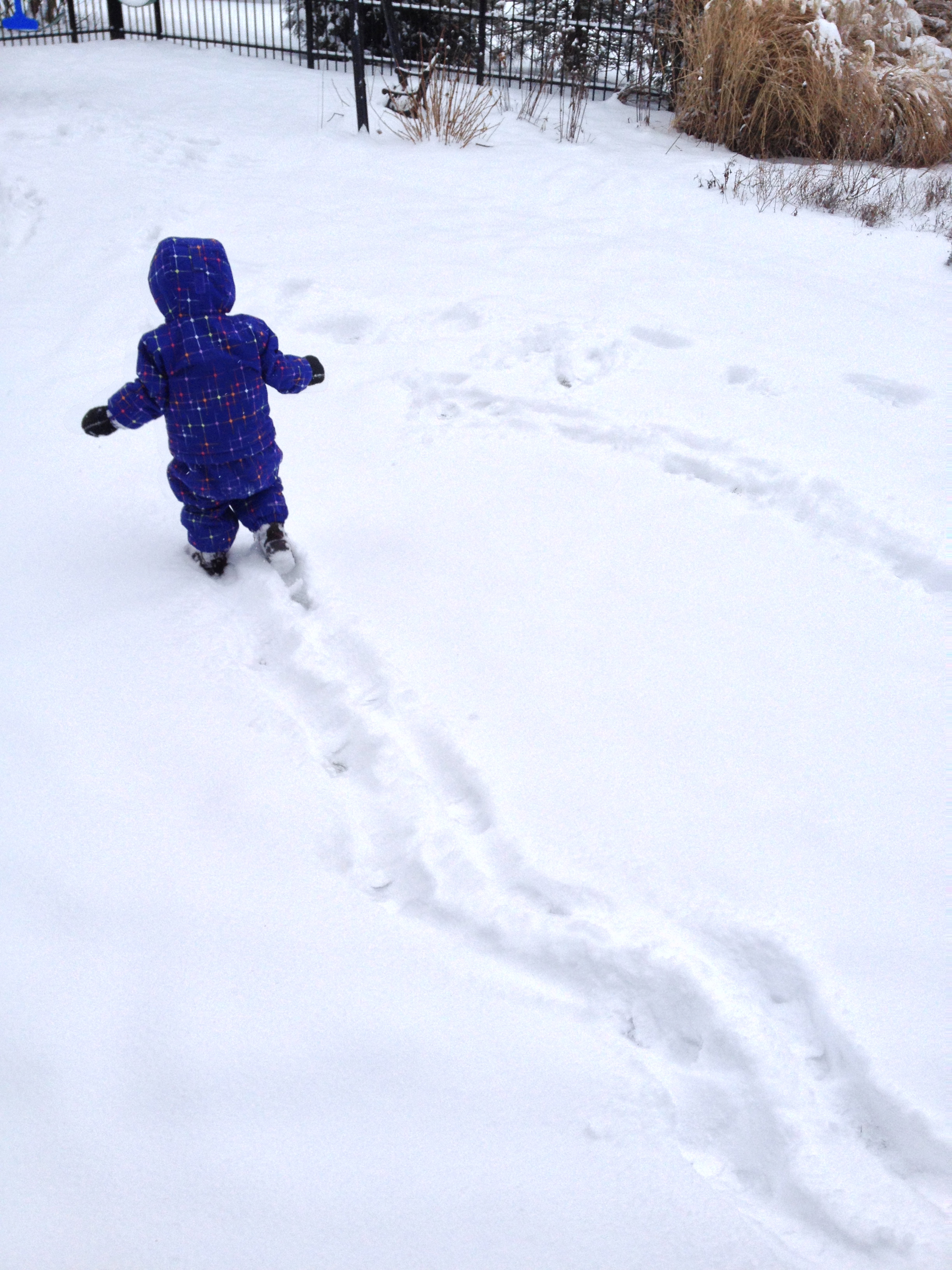
Audrey on a snow-swinging mission, February 2013

Audrey makes tracks, February 2013

Unknown's avatar

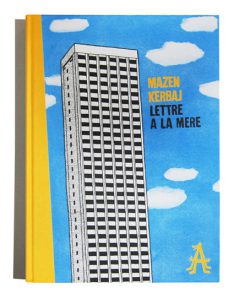
Mazen Kerbaj’s graphic novel Lettre à la mère

Thanks to M. Lynx Qualey at Arabic Literature (in English), I woke up this morning to the announcement that Mazen Kerbaj’s new graphic novel is now available. Very much looking forward to getting my hands on this one – if I’m not mistaken (and someone please correct me if I am), it’s his first longer work in French.

lettre22

I first became aware of Mazen in 2007 through his blog account of the 2006 Israeli War in Lebanon (written primarily in English and some Arabic), which had been translated into French and published by L’Association. After I perused the book, I pulled up his blog, and found his minimalist improvised jazz piece, “Starry Night.” Here is how I described Mazen setting up to record this piece in my dissertation:

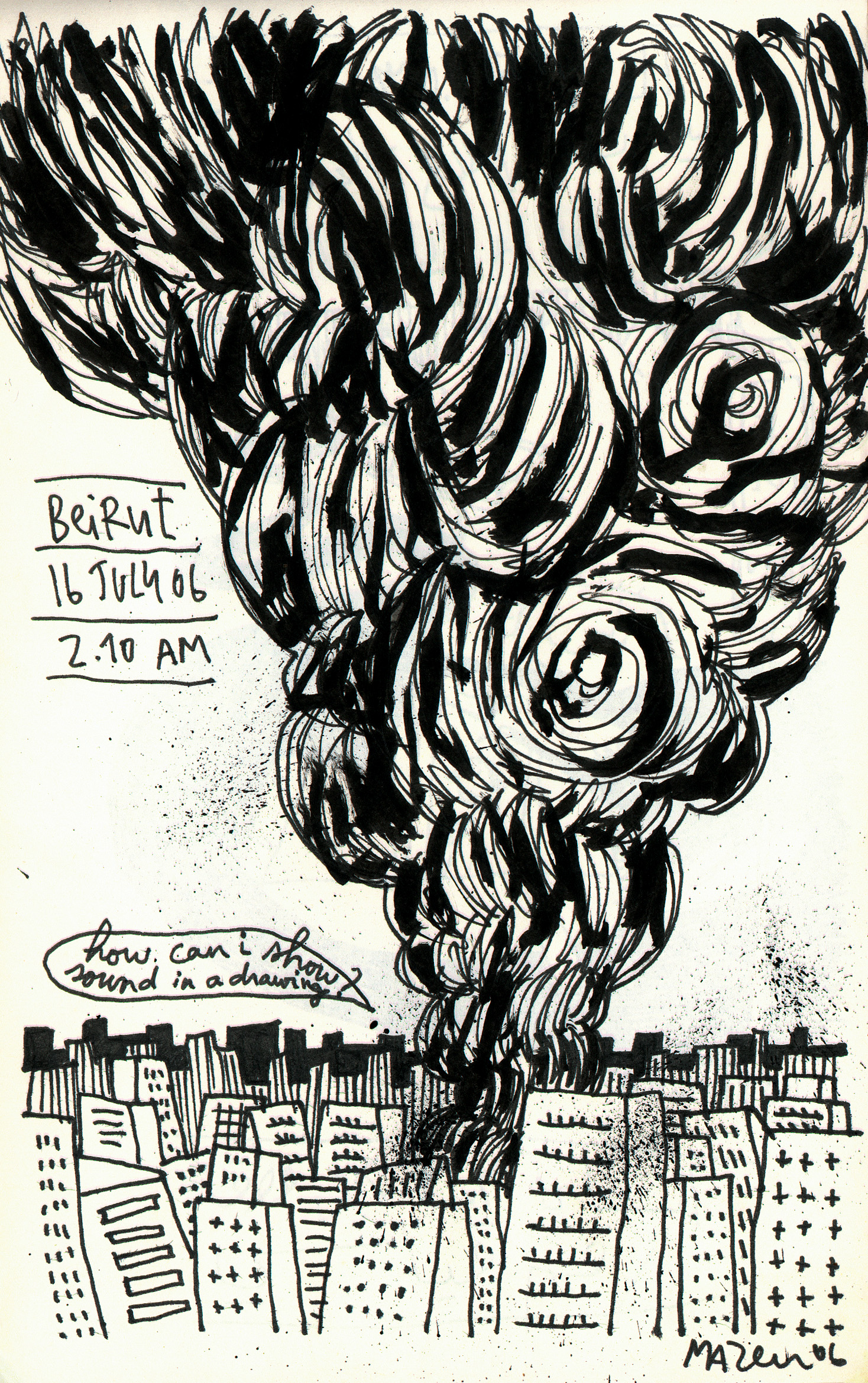
On the night of July 15-16, 2006, Lebanese avant jazz trumpeter and visual artist Mazen Kerbaj set up his recording equipment on the balcony of his Beirut apartment. Once the mics were set up and he had checked sound levels, he hit record. He then improvised on his trumpet to the sight and sounds of bombs falling from Israeli fighter jets. Over the thirty-three days of the 2006 Israeli War, Kerbaj recorded over nine hours of improvisation with the bombs.[1] On July 16, 2006, however, an unedited excerpt from these improvisations of Kerbaj’s first night on the balcony appeared in the sidebar of his blog. Entitled “Starry Night,” this minimalistic improvised piece has remained available on the blog sidebar ever since.

“Starry Night” was one of Kerbaj’s first responses to the Israeli War. The image that Kerbaj posted on his blog the day he posted the piece speaks, perhaps, to one of his aims for the musical piece: finding no clear and urgent means of expression through the visual, he turned to the musical.

beirut_16july

[Note to self: email Mazen at some point to ask about his comment in his email press release, “for those who are not in Lebanon, the book is available in bookstores in France (and the half-dead francophone world). For the rest of the world, it is available online at amazon.fr.”]
___________________________________
Further reading:

[1] Email correspondence with Kerbaj, 28 May 2007.

Unknown's avatar

Elliott Holt’s You Are One of Them

You can read reviews extolling the virtues of this novel all over the place right now (like this one from the Boston Globe), and it’s already making local bookstore bestseller lists. I was interested to check the novel out fairly quickly, since based on what I’d read of the story, it is, like my novel, about traveling elsewhere to work through grief and uncover something about the person/people you’ve lost, and your own identity in relation to that person. (Whew, that was awkward – there must be an actual name for this genre, right?)

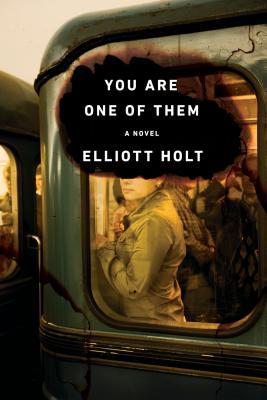
More simply put, You Are One of Them is “a bildungsroman for the atomic age,” says Lauren Groff.  The novel tells the story of Sarah, who, after college, follows the mystery of what happened to her childhood best friend, Jenny, after she had allegedly died in a plane crash when the girls were ten. It’s 1995 and Sarah has received a mysterious email from one Svetlana, teasingly suggesting that Jenny is alive and living in Moscow. Sarah goes to Russia; interesting stuff ensues. That’s basically what I understood of the novel before I picked it up off the front display at The Book Table. I had one my book lover materialist moments, reveling in both the look and feel of the cover (the title and surrounding “burn mark” are set in relief): 

16158564

I was standing there, appreciatively running my fingers over the book jacket. The store was busy; Rachel was behind the counter, and she leaned around the customer she was chatting with to call to me, “Is that You Are One of Them?”

I nodded and smiled. “I’ve been hearing a ton about this book.”

Rachel nodded back, “I started it. It’s pretty great, from what I’ve read so far.”

“Ah, cool.” So then I opened the book, and the opening lines of the prologue had me hooked right away. Let’s see if it does the same thing for you:

“In Moscow I was always cold. I suppose that’s what Russia is known for. But it is winter to a degree I could not have imagined before I moved there. Winter not of the pristine, romantic Doctor Zhivago variety but a season so insistent and hateful that all hope freezes with your toes.”